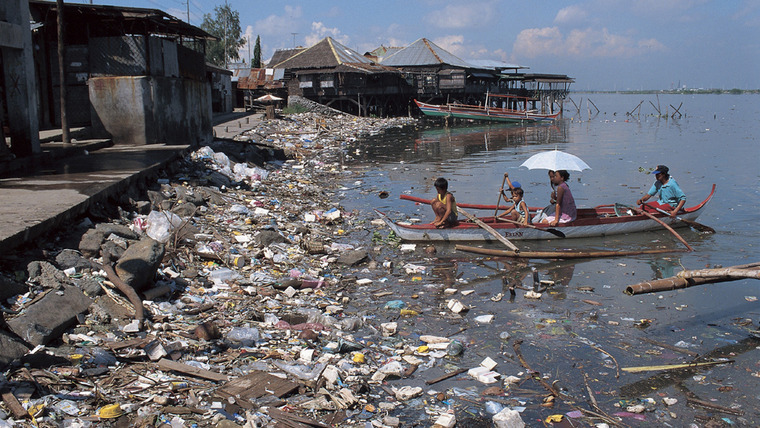
Together with leading experts, David Attenborough examines various scientific data to find out if the planet's ecosystems are really in crisis. If so, how could this happen, what are the most significant factors, and what prevents some species from adapting to changes, as they have done in the past?
All three parts of this mini-series are devoted to the topic of ecology and human influence on the habitat of living beings on Earth, multifactorial and difficult-to-predict mechanisms of ecosystem self-maintenance and how easy it is to destroy the delicate balance of these systems. Attenborough also talks about the main human activities that have a particularly significant and detrimental impact on the environment, about the individual components of this complex impact, about possible ways to solve these problems, about the difficulties of restoring and maintaining natural areas suitable for the conservation of endangered species.
I was a little afraid that the mini-series would turn out to be too alarmist, and perhaps some of the invited specialists sometimes got a little carried away, but Attenborough himself expressed himself very carefully, provided data systematically and consistently, and made assumptions thoroughly reasonable. However, it's still much more negative than positive.
Again, there is a lot of very good filming, there is a lot of interesting and new information, but watching does not give much pleasure - the general theme, as well as individual facts, are not at all joyful. The level of human technical capabilities is critically dangerously ahead of the level of his understanding of the consequences, their mechanisms and scales. With absolute confidence in their right and in the priority of their own needs. I don't see any reason for optimism.
Language. The language of the invited experts was inferior to Attenborough's precise, economical, correct and legible language, but it was also more or less understandable. Subtitles are optional.
All three parts of this mini-series are devoted to the topic of ecology and human influence on the habitat of living beings on Earth, multifactorial and difficult-to-predict mechanisms of ecosystem self-maintenance and how easy it is to destroy the delicate balance of these systems. Attenborough also talks about the main human activities that have a particularly significant and detrimental impact on the environment, about the individual components of this complex impact, about possible ways to solve these problems, about the difficulties of restoring and maintaining natural areas suitable for the conservation of endangered species.
I was a little afraid that the mini-series would turn out to be too alarmist, and perhaps some of the invited specialists sometimes got a little carried away, but Attenborough himself expressed himself very carefully, provided data systematically and consistently, and made assumptions thoroughly reasonable. However, it's still much more negative than positive.
Again, there is a lot of very good filming, there is a lot of interesting and new information, but watching does not give much pleasure - the general theme, as well as individual facts, are not at all joyful. The level of human technical capabilities is critically dangerously ahead of the level of his understanding of the consequences, their mechanisms and scales. With absolute confidence in their right and in the priority of their own needs. I don't see any reason for optimism.
Language. The language of the invited experts was inferior to Attenborough's precise, economical, correct and legible language, but it was also more or less understandable. Subtitles are optional.